Checked & unbalanced
10th December, 2021 I’m often educated by my law trained business partner as to…


Inheritance Tax (IHT) is one of the most significant considerations in long-term wealth planning, especially as asset values rise. Understanding the role of lifetime allowances, from gifting exemptions to nil-rate bands, is essential for anyone looking to pass on wealth efficiently and minimise future tax exposure.
These allowances shape how much you can transfer during your lifetime without triggering immediate IHT charges and how much of your estate can pass tax-free on death. Used well, they represent one of the most effective tools available for reducing the eventual IHT burden on your beneficiaries.
IHT lifetime allowances are the rules and thresholds that determine how much value you can give away or shield from IHT over your lifetime. Key components include:
Together, these allowances form the framework of effective IHT planning, allowing you to gradually reduce your taxable estate during your lifetime.
Transfers into discretionary trusts may trigger a 20% lifetime IHT charge if above the NRB. Furthermore, trusts face periodic and exit charges which are based on the available NRB at the time of entry, making allowance planning essential before settling assets.
The NRB and RNRB are the foundation of IHT planning. For married couples and civil partners, anything left to a surviving spouse is exempt from IHT. Any unused Nil Rate Band and Residence Nil-Rate Band (RNRB) can be transferred to the survivor, potentially adding up to £500,000 in extra tax-free allowance on the second death.
For larger estates, using lifetime allowances to reduce value early can have a significant compounding effect on future tax savings.
Lifetime gifting allowances, particularly gifts out of income, can be an exceptionally powerful tool. Surplus income gifts can remove value from your estate immediately without the seven-year rule, provided they are:
Understanding these nuances is key to making tax-efficient intergenerational wealth transfers.
Many estates grow beyond the IHT thresholds simply due to rising property values, investment returns, or business assets. Using lifetime allowances proactively can help control future exposure and reduce the need for complex planning later.
Transfers into trusts count towards your lifetime allowances and may trigger IHT if above the NRB. Understanding when and how to use trusts and how they fit within your lifetime allowance framework, is essential for those with family wealth, business assets, or overseas structures.
Effective use of lifetime allowances can help you:
The earlier planning starts, the more powerful these allowances become, particularly for long-term gifting strategies.
IHT lifetime allowances are fundamental tools in estate planning. They determine how much wealth you can transfer tax-free during your lifetime and how much of your estate will ultimately be exposed to IHT. With thresholds frozen and estate values rising, making full use of these allowances is more important than ever.
If you want to understand how these allowances apply to your personal circumstances, and how to structure your estate efficiently, we’re here to help.
Get in touch to arrange a confidential conversation about your IHT and estate planning strategy.
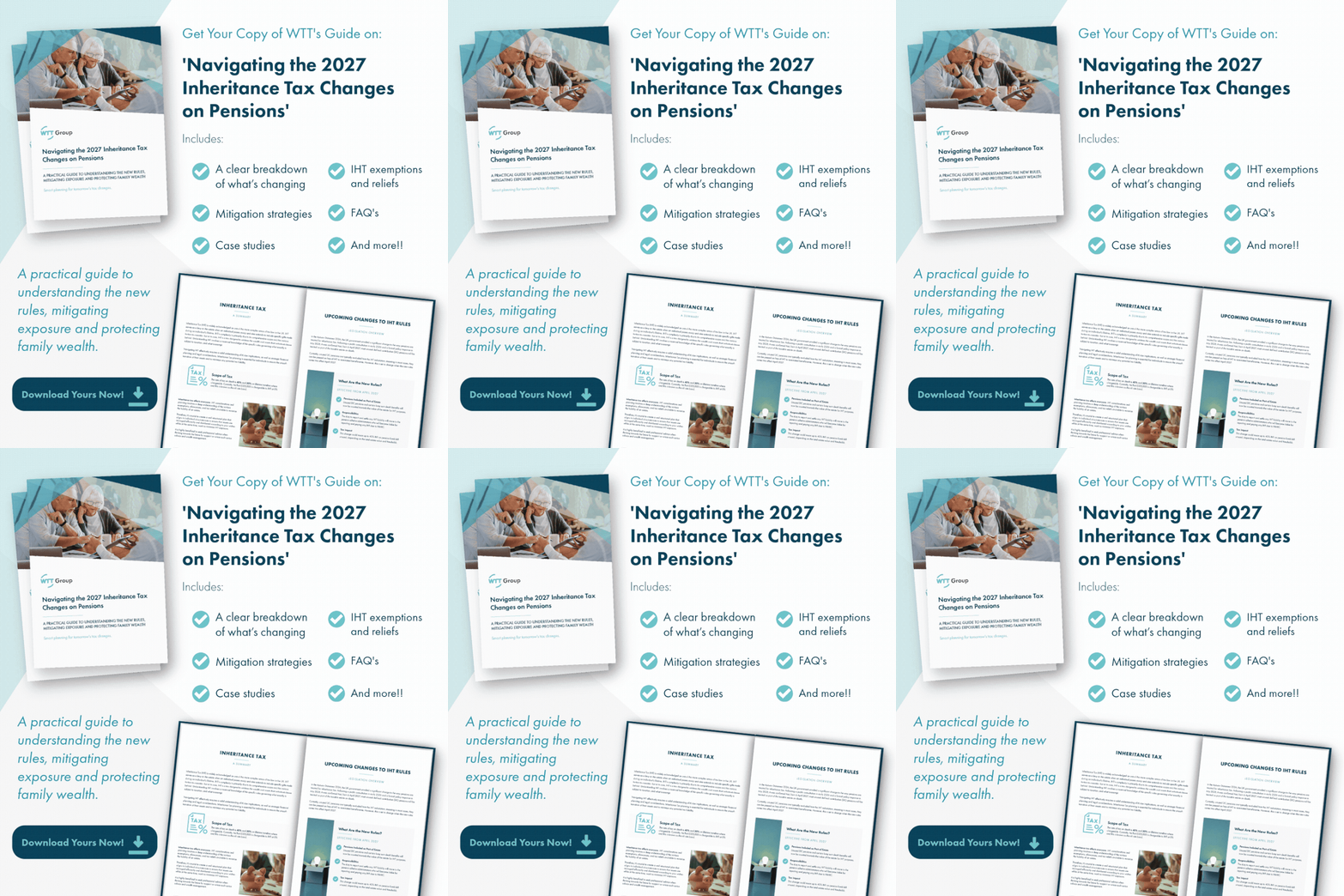
We’ve created an in-depth, comprehensive guide to help you understand the new IHT rules, what they mean for your estate, and how you can act now to protect your wealth.
Download our guide ‘Navigating the 2027 Inheritance Tax Changes on Pensions’ here.
Got some questions? Book a free 20-minute consultation with one of our advisors to discuss inheritance tax mitigation strategies.
The information contained in this blog is provided for informational purposes only and should not be construed as tax advice on any matter. Circumstances will affect tax requirements and liabilities and advice should be tailored to your individual circumstances

 Article
10th December, 2021 I’m often educated by my law trained business partner as to…
 Article
2nd July, 2021 Crypto Tax- What can we learn from the US? Introduction The…
 Article
Loan Demands: What They Mean and What to Do Next Key considerations and early…
 Article
Missing the Self Assessment tax return deadline can happen more easily than you think,…
 Article
There has recently been an increase in trustees of established employee benefit trusts attempting…
We’d love to hear from you!
Whether you simply have a quick question, or were seeking a more formal conversation to discuss your tax needs, drop your details here and we will be in touch! Alternatively, you can contact us on +44 (0)20 3468 0000.